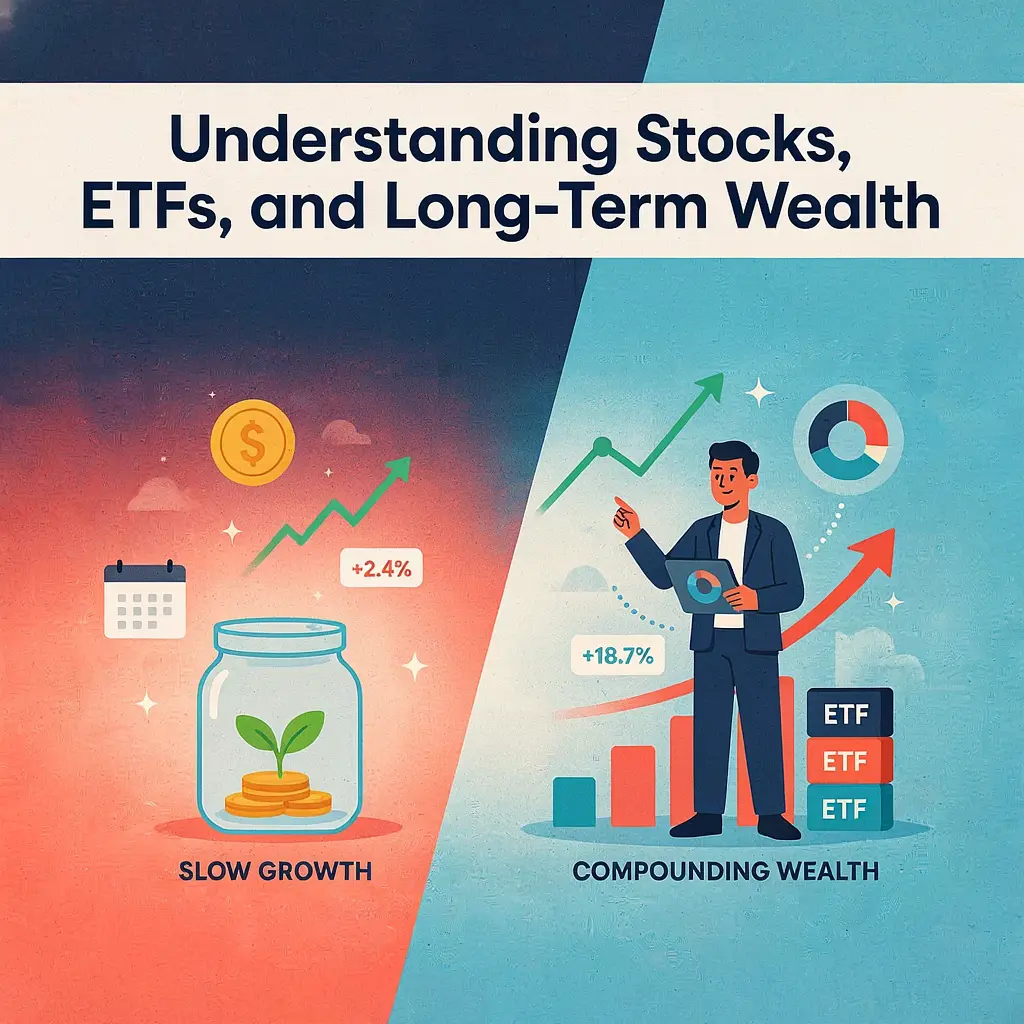
For many people, investing feels like stepping into a world built for someone else. The language sounds complicated, the charts look intimidating, and the fear of losing money often keeps beginners on the sidelines. It's easy to assume you need thousands of dollars, a finance degree, or years of experience before making your first investment.
The truth is far simpler.
Some of today's most successful investors didn't begin with large fortunes or perfect timing. They started by understanding a few basic principles, investing consistently, and allowing time to do the heavy lifting. Building wealth isn't usually about finding the next company that explodes overnight, it's about making smart decisions repeatedly over many years.
One of the biggest misconceptions is that investing is the same as gambling. While both involve uncertainty, successful investing is built on research, patience, and long-term thinking. Instead of trying to predict tomorrow's stock price, experienced investors focus on owning quality businesses, diversified funds, and assets that have historically grown in value over time.
Another common myth is that you need a lot of money to get started. Thanks to modern investment platforms, many people begin with as little as $10 or $20. Fractional shares, low-cost exchange-traded funds (ETFs), and automated investing have made the stock market more accessible than ever before. The amount you start with matters far less than your willingness to stay consistent.
There's also the temptation to wait for the "perfect" moment. Maybe after your next paycheck. Maybe after the market falls. Maybe when you feel more confident. But history has shown that time in the market generally matters far more than trying to perfectly time the market. Every month you delay is another month your money isn't working for you.
Investing is ultimately about giving your future self more choices. It can help fund retirement, buy your first home, pay for your children's education, create passive income, or simply provide greater financial security. While no investment is guaranteed, the stock market has rewarded patient, long-term investors over decades despite recessions, crashes, and periods of uncertainty.
In this guide, you'll learn exactly how investing works in plain English. We'll explain what stocks and ETFs are, how they generate returns, why compound growth is often called the eighth wonder of the world, and how beginners can build a simple investment strategy without feeling overwhelmed. By the end, you'll have a solid foundation to start investing with confidence and begin building long-term wealth one step at a time.
What Is Investing? Investing Explained in Simple Terms
At its core, investing is the process of putting your money into assets that have the potential to grow in value over time. Instead of letting your money sit idle in a bank account, investing gives it the opportunity to earn returns through business growth, dividends, interest, or appreciation.
Think of it this way: when your money is sitting in a regular savings account, it may earn a small amount of interest each year. While that's better than keeping cash under your mattress, inflation can slowly reduce your purchasing power. If prices rise faster than your savings grow, your money is effectively losing value over time.
Investing aims to outpace inflation by putting your money to work. Rather than earning a small fixed return, your investments have the potential to increase in value as companies grow, economies expand, and financial markets move forward over the long term.
Saving vs. Investing: What's the Difference?
Although saving and investing are both important, they serve different purposes.

Saving is designed for money you'll need in the near future. Emergency funds, vacation savings, or a down payment on a home are often kept in savings accounts because the money is easily accessible and relatively safe.
Investing, on the other hand, is intended for long-term goals. Money that you won't need for five, ten, or even thirty years can potentially grow much faster when invested in assets like stocks or ETFs.
A simple way to think about it is:
- Saving protects your money.
- Investing grows your money.
Most healthy financial plans include both.
You're Buying Ownership, Not Just Numbers on a Screen
One of the biggest misconceptions about investing is that people are simply buying random numbers that go up and down every day.
In reality, when you buy a stock, you're purchasing a small ownership stake in a real business. If you buy shares of a successful company, you're becoming one of its many owners. As that company grows, earns profits, launches new products, and expands into new markets, the value of your investment can grow as well.
Similarly, when you buy an ETF, you're purchasing a collection of many companies packaged into a single investment. Instead of relying on one business to succeed, you're spreading your money across dozens, or even hundreds, of companies at once.
Investing Is a Marathon, Not a Sprint
Many beginners expect quick profits, but investing works best when viewed as a long-term journey. Markets naturally rise and fall, and prices can fluctuate daily due to news, economic events, or investor sentiment. These short-term movements are normal and shouldn't distract you from your long-term goals.
Historically, investors who remain patient through market ups and downs have often been rewarded over time. Rather than trying to predict every price movement, successful investors focus on consistency, discipline, and allowing compound growth to work in their favor.
A Simple Real-World Example
Imagine you invest $50 every week into a diversified ETF. At first, your account may not seem to grow much. But as the months turn into years, your investments can begin generating returns of their own. Those returns then generate additional returns, creating a compounding effect that accelerates growth over time.
You didn't need to predict the next winning stock or constantly trade in and out of the market. You simply invested consistently and allowed time to do the work.
That's the essence of investing: making your money work for you today so it can provide greater financial freedom tomorrow.
Why You Should Start Investing Early
If there is one advantage that outweighs almost everything else in investing, it's time.
You don't need to earn a six-figure salary, find the next breakthrough company, or invest thousands of dollars every month to build wealth. Starting early, even with small amounts, can make a remarkable difference because your investments have more time to grow and compound.
Many people delay investing because they believe they'll start "when they have more money." While that sounds reasonable, waiting often becomes the most expensive financial decision they never realize they're making.
Time Is More Powerful Than the Amount You Invest
Imagine two friends, Alex and Jordan.
Alex starts investing $50 per week at age 25 and continues until age 35. After ten years, Alex stops contributing but leaves the money invested.
Jordan waits until age 35 to begin investing. Jordan contributes the same $50 per week but continues investing all the way until retirement.
Even though Jordan invests for more years overall, Alex may still end up with a similar, or even larger, portfolio simply because those early investments had an extra decade to grow.
This is one of the greatest lessons in personal finance: the earlier your money starts working, the less work you have to do later.
The Magic of Compound Growth
Compound growth is often described as earning returns on your returns.
Let's say you invest $1,000 and it grows by 10% during the first year. Your investment is now worth $1,100.
If it grows another 10% the following year, you don't earn 10% on your original $1,000, you earn 10% on $1,100. Your money has begun generating its own growth.
As this process repeats over many years, your investment can accelerate without you having to increase your effort. The longer you stay invested, the more powerful this compounding effect becomes.
Think of it like rolling a snowball down a hill. At first, it grows slowly. But as it gathers more snow, it becomes larger, heavier, and picks up momentum. Investing works in much the same way.
Small Contributions Add Up
One of the biggest myths is that investing only works if you can afford to invest large amounts.
In reality, consistency usually matters more than size.
Investing:
- $20 every week
- $50 every week
- $100 every month
may not seem impressive today, but those regular contributions can grow into substantial wealth over decades when combined with market growth and compound returns.
The habit of investing consistently is often more valuable than waiting until you can invest a much larger amount.
Waiting Has a Cost
Many people spend years waiting for the "perfect" time to invest.
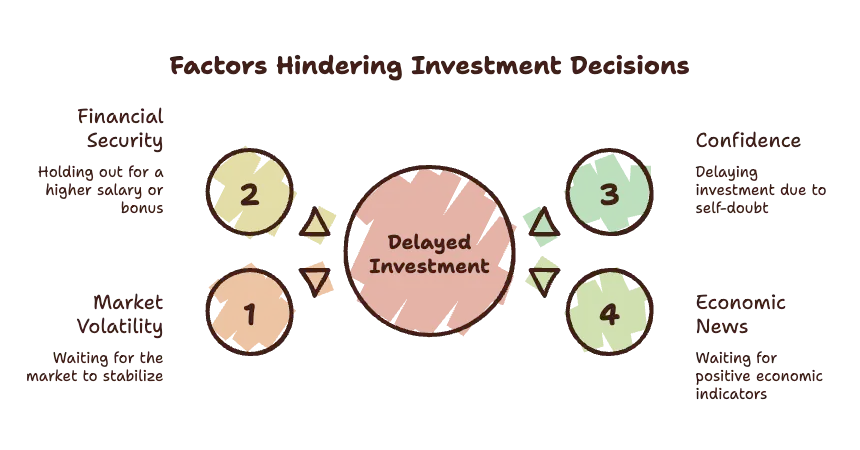
They wait for:
- The market to stop falling.
- A higher salary.
- A bonus at work.
- More confidence.
- Better economic news.
The problem is that the perfect time rarely arrives.
Financial markets have always experienced uncertainty, yet they have also historically recovered from recessions, corrections, and major global events. Investors who stay on the sidelines while waiting for perfect conditions often miss valuable years of potential growth.
Investing Builds Financial Freedom
Starting early isn't just about growing a larger portfolio, it's about creating more options for your future.
Long-term investing can help you:
- Retire comfortably.
- Buy a home with greater financial confidence.
- Generate passive income.
- Pay for education or major life goals.
- Build generational wealth for your family.
- Reduce financial stress later in life.
Every investment you make today is a contribution to the life you want tomorrow.
The Best Time Was Yesterday. The Second-Best Time Is Today.
You've probably heard the saying, "The best time to plant a tree was 20 years ago. The second-best time is today." Investing follows the same principle.
You can't change when you could have started, but you can decide when you'll begin. Whether you're investing your first $10 or your first $1,000, taking action now gives your money the one thing it needs most: time.
The sooner you begin, the longer compound growth has to work in your favor, and that simple decision can make all the difference over the years ahead.
Understanding Stocks: What Are Stocks and How Do They Work?
Stocks are often the first investment people hear about, but many beginners aren't entirely sure what they actually are. You may have heard someone say they "bought Apple stock" or "invested in NVIDIA," but what does that really mean?
Simply put, a stock represents a small piece of ownership in a company. When you purchase a share of stock, you're buying a tiny percentage of that business. While your ownership may be very small, you still benefit if the company becomes more valuable over time.
Think of a company as a large pizza cut into millions, or even billions, of slices. Each slice represents a share. Buying one or more shares means you own a small part of that pizza.
Why Do Companies Sell Stocks?
Companies sell stock to raise money.
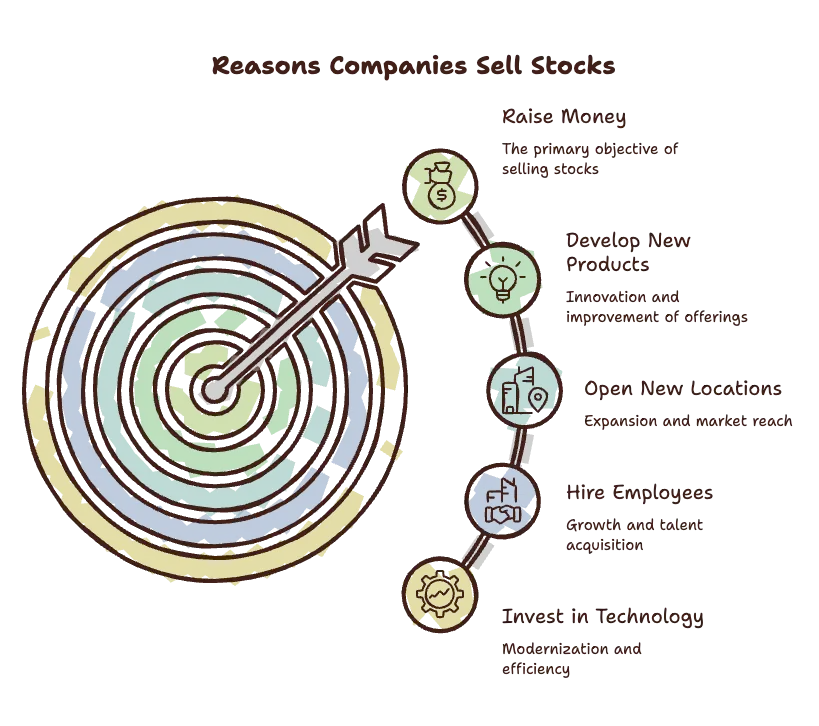
Instead of borrowing from a bank, a company can sell shares to investors and use the funds to:
- Develop new products
- Open new locations
- Hire employees
- Invest in technology
- Expand into new markets
- Pay off debt
In return, investors become part owners and share in the company's future success, or failure.
How Do Investors Make Money From Stocks?
There are two primary ways investors earn money from stocks.
1. Capital Appreciation
This is the most common way investors profit.
If you buy a stock for $100 and its price rises to $150, your investment has increased by $50. If you decide to sell, you've realized a profit.
For example:
- Buy one share for $75
- The company grows over several years
- The share price increases to $130
- Your investment has gained $55, excluding any fees or taxes
Many successful long-term investors focus on owning quality companies that continue increasing in value over many years rather than chasing quick profits.
2. Dividends
Some companies share a portion of their profits with shareholders through dividends.
A dividend is essentially a cash payment made to investors, usually every quarter, simply for owning the stock.
For example, imagine you own 100 shares of a company that pays a quarterly dividend of $0.50 per share.
You would receive:
- 100 shares × $0.50 = $50 every quarter
Many investors choose to automatically reinvest these dividends, purchasing additional shares that can generate even more dividends in the future. This creates another layer of compound growth.
Not every company pays dividends. Younger, fast-growing businesses often reinvest their profits back into expansion instead.
Why Do Stock Prices Change?
One of the biggest questions beginners ask is why stock prices move up and down every day.
Stock prices are influenced by supply and demand.
When more people want to buy a company's shares than sell them, the price generally rises.
When more investors want to sell than buy, the price usually falls.
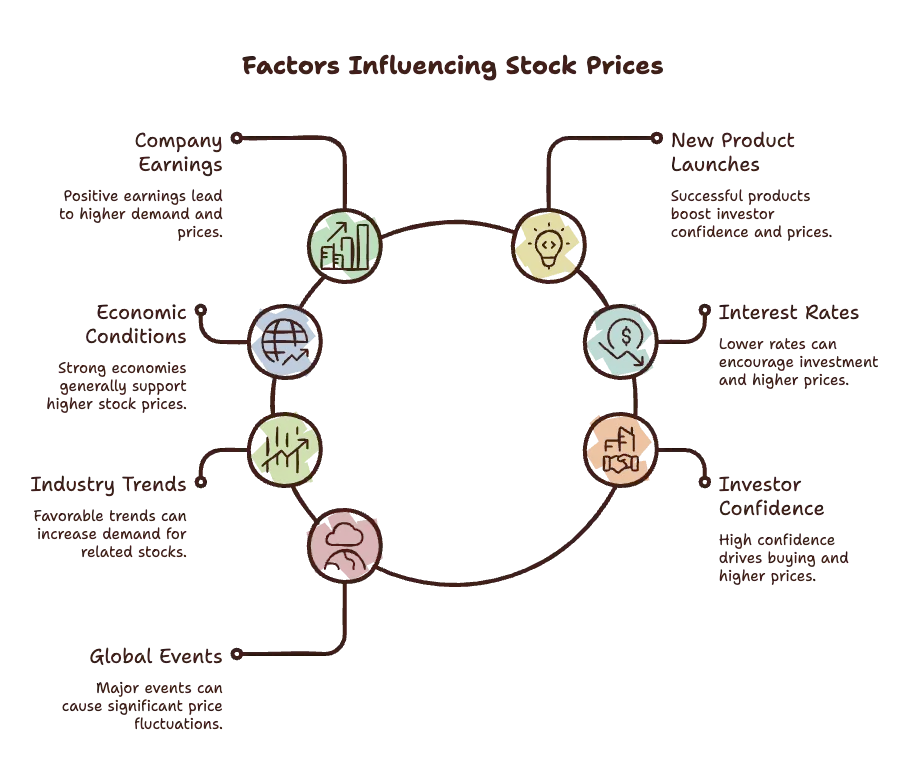
Several factors can influence this demand, including:
- Company earnings
- New product launches
- Economic conditions
- Interest rates
- Industry trends
- Investor confidence
- Global events
Because of these influences, it's completely normal for stock prices to fluctuate from day to day. Short-term volatility is simply part of investing.
Owning Stocks Means Sharing in a Company's Success
When you invest in a strong company, you're betting on its ability to grow over time.
If the business develops better products, attracts more customers, increases profits, and expands into new markets, its value may rise. As a shareholder, your investment can grow alongside the company's success.
This is why many long-term investors prefer owning businesses they understand and believe will continue thriving for years to come.
Benefits of Investing in Stocks
Individual stocks offer several advantages:
- High long-term growth potential
- Opportunity to own world-leading companies
- Dividend income from certain businesses
- Easy to buy and sell through brokerage accounts
- Potential to outperform broader market indexes
For investors willing to research companies and remain patient, stocks can become a powerful tool for building wealth.
Risks of Investing in Stocks
While stocks offer attractive growth potential, they also carry risk.
Individual companies can experience:
- Falling sales
- Increased competition
- Poor management decisions
- Economic downturns
- Industry disruption
As a result, stock prices can decline significantly, and in rare cases, companies can fail entirely.
This is why investing all your money in a single company is generally considered risky. Many experienced investors reduce this risk by spreading their investments across multiple companies or by investing in ETFs that provide instant diversification.
Stocks Are About Ownership, Not Speculation
Many beginners see stocks as numbers constantly flashing red and green on a screen. In reality, every share represents ownership in a real business with employees, products, customers, and long-term goals.
Successful investors focus less on daily price movements and more on the underlying strength of the companies they own. By thinking like a business owner instead of a short-term trader, you'll be in a much stronger position to build wealth over the long run.
Why ETFs Are Perfect for Beginners
If you've started researching investing, you've probably come across the term ETF. Many experienced investors recommend ETFs as one of the best places for beginners to start, and for good reason.
An Exchange-Traded Fund (ETF) allows you to invest in dozens, hundreds, or even thousands of companies through a single purchase. Instead of trying to decide which individual stock will perform best, an ETF spreads your investment across many businesses, reducing risk while still giving you exposure to the stock market.
For most new investors, ETFs offer a simple, low-maintenance way to begin building wealth without needing to become an expert in analyzing companies.
What Is an ETF?
An ETF is a basket of investments bundled together into one fund.
Imagine walking into a grocery store and buying a fruit basket instead of selecting individual apples, oranges, bananas, and grapes one by one. An ETF works in much the same way. Rather than purchasing shares of each company separately, you buy one investment that already contains a diversified collection of assets.
Depending on the ETF, it may include:
- Large technology companies
- Healthcare businesses
- Financial institutions
- Consumer brands
- Energy companies
- International stocks
- Bonds
- Commodities
- Or a combination of different asset classes
This built-in diversification is one of the biggest reasons ETFs have become so popular among beginner and long-term investors alike.
How ETFs Work
Most ETFs are designed to track a particular index, industry, or investment strategy.
For example, an ETF that tracks a broad market index automatically owns shares of many of the companies included in that index. As those companies grow or decline, the value of the ETF changes accordingly.
Unlike mutual funds, ETFs trade on stock exchanges throughout the day, meaning you can buy or sell them during normal market hours just like individual stocks.
The Power of Diversification
One of the oldest investing principles is simple:
Don't put all your eggs in one basket.
Imagine investing all of your savings into a single company. If that business struggles, your entire portfolio could suffer.
Now imagine spreading that same money across hundreds of successful companies operating in different industries.
If one company has a difficult year, others may continue performing well, helping balance your overall portfolio.
This is exactly what diversification is designed to accomplish.
By owning many companies at once, ETFs reduce the impact that any single company's poor performance can have on your investments.
While diversification doesn't eliminate risk, it can significantly reduce unnecessary risk.
Why ETFs Are Ideal for Beginners
ETFs solve several problems that new investors often face.
Instead of asking:
- Which company should I buy?
- What if I choose the wrong stock?
- How many companies should I own?
- How often should I rebalance my portfolio?
An ETF answers many of those questions automatically.
Benefits include:
- Instant diversification
- Lower risk compared to owning a single stock
- Low management fees on many index ETFs
- Easy to buy and sell
- Suitable for long-term investing
- Requires less ongoing research
This allows beginners to focus on developing good investing habits rather than constantly trying to predict which company will outperform next.
Popular Types of ETFs
There are thousands of ETFs available, each designed with a different objective. Some of the most common categories include:
Broad Market ETFs
These aim to track the overall stock market or a major index, giving investors exposure to hundreds of companies across multiple industries.
Technology ETFs
These focus on technology companies involved in areas such as software, semiconductors, artificial intelligence, and cloud computing.
Dividend ETFs
These invest in companies known for paying regular dividends, making them popular with investors seeking income.
International ETFs
These provide exposure to companies outside your home country, helping diversify across global markets.
Sector ETFs
These concentrate on specific industries such as healthcare, financial services, real estate, clean energy, or consumer goods.
Understanding ETF Fees
One advantage of many ETFs is their relatively low cost.
Most ETFs charge what's known as an expense ratio, which is a small annual fee used to manage the fund.
For example, an ETF with a 0.05% expense ratio would charge approximately $5 per year for every $10,000 invested.
While that may seem insignificant, lower fees can make a meaningful difference over decades because more of your investment remains invested and continues compounding.
Can ETFs Lose Money?
Yes.
Because ETFs invest in financial markets, their value can rise and fall just like individual stocks.
If the overall market declines, many ETFs will decline as well.
The difference is that diversified ETFs are generally less dependent on the success of one company. Instead, they reflect the performance of many businesses, making them less volatile than holding only a handful of individual stocks.
For long-term investors, temporary market declines are considered a normal part of investing rather than a reason to panic.
Why So Many Long-Term Investors Choose ETFs
Many successful investors build the foundation of their portfolios with ETFs because they offer a combination that's difficult to beat:
- Broad diversification
- Low costs
- Simplicity
- Long-term growth potential
- Minimal maintenance
Rather than trying to outperform the market by constantly buying and selling stocks, many investors are content to own the market itself through diversified ETFs. Over time, this disciplined approach has helped countless people steadily grow their wealth while avoiding many of the common mistakes that come with chasing short-term trends.
For beginners, ETFs provide an excellent starting point. They remove much of the guesswork from investing and make it easier to stay focused on what matters most: investing consistently, staying patient, and giving your money time to grow.
Stocks vs. ETFs: Which One Should Beginners Choose?
Now that you understand what stocks and ETFs are, you might be wondering which is the better choice. The answer depends on your goals, experience, and how involved you want to be in managing your investments.
Neither option is inherently better than the other. Individual stocks offer the potential for higher returns if you choose successful companies, while ETFs provide broad diversification and a simpler path to long-term investing. Many experienced investors actually own both, using ETFs as the foundation of their portfolio and adding individual stocks to pursue additional growth.
Let's compare them side by side.
Feature | Stocks | ETFs |
Ownership | A share of one company | A collection of many companies or assets |
Diversification | Low unless you own many stocks | High, often holding dozens to thousands of investments |
Risk | Higher because performance depends on one company | Lower due to diversification |
Potential Returns | Can outperform the market if you choose exceptional companies | Typically aims to match the performance of its underlying index or strategy |
Research Required | High, you should understand each company you invest in | Lower, the fund manager or index determines the holdings |
Volatility | Often more volatile | Generally smoother because gains and losses are spread across many holdings |
Costs | Usually no management fee, though trading costs may apply | Small annual expense ratio on most ETFs |
Best For | Investors who enjoy researching businesses and accepting more risk | Beginners and long-term investors seeking simplicity and diversification |
When Individual Stocks Make Sense
Buying individual stocks can be rewarding if you're willing to put in the time to research companies. By understanding a business's financial health, competitive advantages, leadership, and future prospects, you may identify opportunities for above-average returns.
For example, investors who recognized the long-term potential of companies like Apple, Amazon, or NVIDIA years before they became household giants were rewarded with significant gains. Of course, it's important to remember that not every company follows that path. Even well-known businesses can struggle, and some may never recover from poor decisions or changing market conditions.
Owning individual stocks requires patience, ongoing research, and the discipline to avoid making emotional decisions based on short-term market movements.
When ETFs Make Sense
ETFs are often recommended for beginners because they remove much of the guesswork from investing.
Instead of trying to identify tomorrow's winning company, an ETF spreads your investment across many businesses. If one company underperforms, the impact is usually softened by the performance of the others in the fund.
This diversification makes ETFs a practical choice for people who:
- Are new to investing
- Prefer a hands-off approach
- Want broad market exposure
- Don't have time to research individual companies
- Are focused on long-term wealth building
For many investors, regularly contributing to a diversified ETF can be an effective and low-stress way to grow wealth over time.
Can You Own Both?
Absolutely.
In fact, this is one of the most common strategies used by experienced investors.
A portfolio might look something like this:
- 70–90% invested in diversified ETFs as the core of the portfolio
- 10–30% invested in carefully selected individual stocks for additional growth potential
This approach provides the stability and diversification of ETFs while still allowing investors to invest in companies they strongly believe in.
Keep in mind that these percentages are only examples. Your ideal allocation depends on factors such as your financial goals, time horizon, and comfort with risk.
Which Option Is Better for Long-Term Wealth?
If your primary goal is to steadily build wealth over many years, ETFs are often the easier starting point. They offer diversification, lower risk than holding a single stock, and require less ongoing management.
That doesn't mean individual stocks should be avoided. As your knowledge and confidence grow, adding carefully chosen companies to your portfolio can complement a diversified ETF strategy.
The key is to avoid viewing investing as an all-or-nothing decision. You don't have to choose one forever. Many investors begin with ETFs, gain experience over time, and later add individual stocks as they become more comfortable evaluating businesses.
The Bottom Line
For most beginners, simplicity is a strength, not a weakness.
A diversified ETF allows you to participate in the growth of the stock market without needing to predict which single company will outperform next. As you learn more about investing, you can decide whether individual stocks fit your strategy and risk tolerance.
Whichever path you choose, the habits that matter most remain the same: invest consistently, stay diversified, keep your costs low, and focus on the long term. Those principles have helped generations of investors build wealth, regardless of whether they started with stocks, ETFs, or a combination of both.
Understanding Risk Without Being Scared
One word causes more anxiety for new investors than almost any other: risk.
The moment people hear that investing involves risk, many decide it's safer to avoid the stock market altogether. While this reaction is understandable, it often comes from misunderstanding what investment risk actually means.
Risk doesn't automatically mean you'll lose all your money. In most cases, it simply means that the value of your investments will fluctuate over time. Markets rise, markets fall, and prices change every day. Those ups and downs are a normal part of investing, not necessarily a sign that something has gone wrong.
The key isn't to eliminate risk. It's to understand it and manage it wisely.
Volatility Isn't the Same as Losing Money
One of the biggest mistakes beginners make is confusing volatility with loss.
Volatility refers to the short-term movement of investment prices. A stock or ETF might drop 5% in a week, rise 8% the following month, and fall again after unexpected news. These price swings can feel unsettling, especially if you're checking your portfolio every day.
However, a temporary decline only becomes a permanent loss if you sell your investment while it's down.
Imagine buying shares of a quality company for $100. A few months later, the price falls to $80 because of a broader market downturn. If you panic and sell, you've locked in a loss.
But if the company remains financially strong and the market eventually recovers, the share price may climb back above your original purchase price. Investors who stay patient during temporary downturns often benefit from the eventual recovery.
Why Markets Go Up and Down
Financial markets respond to a wide range of factors, including:
- Economic growth
- Inflation
- Interest rate changes
- Corporate earnings
- Political events
- Technological innovation
- Natural disasters
- Global conflicts
- Investor sentiment
Because these events are constantly changing, market prices naturally fluctuate.
While these movements can seem dramatic in the short term, history has shown that markets have repeatedly recovered from recessions, financial crises, and major global events over the long run.
Market Declines Are Normal
It's easy to think that a falling market is unusual, but corrections and downturns are part of every investing journey.
In fact, broad stock markets have experienced numerous declines throughout history, yet they have also recovered and continued reaching new highs over the long term.
This doesn't mean future performance is guaranteed, but it does illustrate an important lesson: temporary declines are a normal feature of investing, not an exception.
Experienced investors understand that volatility is the price paid for the opportunity to earn higher long-term returns than many traditional savings accounts.
The Biggest Risk May Be Doing Nothing
Ironically, avoiding investing altogether carries its own risk.
Money sitting in cash may feel safe because its value doesn't fluctuate from day to day. However, inflation gradually reduces its purchasing power over time.
Imagine keeping $10,000 in cash for many years while the prices of housing, food, healthcare, and everyday goods continue rising. Even though the dollar amount hasn't changed, what that money can actually buy has decreased.
Investing aims to help your money grow faster than inflation so your purchasing power can increase rather than decline.
How to Reduce Investment Risk
Although no investment is completely risk-free, there are several ways to manage risk effectively.
Diversify Your Investments
Avoid putting all of your money into a single company or industry. Diversifying across many businesses, sectors, and even countries can reduce the impact of one poor-performing investment.
Invest for the Long Term
The longer your investment horizon, the more time your portfolio has to recover from temporary market declines.
Investors saving for retirement decades away generally have more flexibility than someone investing money they'll need next year.
Invest Consistently
Rather than trying to predict market highs and lows, many investors contribute regularly through a strategy known as dollar-cost averaging. Investing on a consistent schedule helps smooth out the effect of market volatility over time.
Keep an Emergency Fund
Having several months of living expenses in a readily accessible savings account reduces the likelihood that you'll need to sell investments during a market downturn to cover unexpected expenses.
Don't Let Emotions Control Your Decisions
Markets can trigger powerful emotions.
When prices rise rapidly, many people feel excitement and fear of missing out. When prices fall, fear often takes over, leading some investors to sell at exactly the wrong time.
Successful long-term investors recognize these emotional traps. Instead of reacting to every headline or market swing, they stick to a well-thought-out investment plan.
Patience and discipline often prove more valuable than trying to predict short-term market movements.
Risk and Reward Go Hand in Hand
One of the fundamental principles of investing is that higher potential returns usually come with higher levels of risk.
For example:
- Cash savings generally have low risk but lower long-term returns.
- Government bonds often offer moderate stability with moderate returns.
- Diversified stock ETFs have historically provided stronger long-term growth but experience more short-term volatility.
- Individual stocks can deliver exceptional returns, but they also carry greater company-specific risk.
Understanding this relationship helps you choose investments that match your financial goals and comfort level.
Focus on the Long-Term Picture
If you look at your investments every day, you'll almost certainly see periods of gains and losses. That's completely normal.
Instead of asking, "What happened today?" experienced investors tend to ask, "Where could this investment be in 10, 20, or 30 years?"
That shift in perspective changes everything.
Risk will always be part of investing, but it doesn't have to be something you fear. By diversifying your portfolio, investing consistently, staying patient, and keeping your focus on long-term goals, you can navigate market ups and downs with greater confidence and build wealth steadily over time.
What Is Compound Interest (and Why Everyone Talks About It?)
If you've spent any time learning about personal finance, you've probably heard the phrase "compound interest is the eighth wonder of the world." Whether or not you've heard that famous quote before, there's no denying one thing: compound growth is one of the most powerful forces behind long-term wealth.
It's the reason someone who invests consistently over several decades can end up with a portfolio worth hundreds of thousands, or even millions, of dollars, despite never making an extraordinary salary or picking the perfect stock.
The best part? Compound growth works quietly in the background. Once you understand how it operates, you'll see why experienced investors value time just as much as money.
What Is Compound Interest?
Compound interest is the process of earning returns not only on the money you originally invest but also on the returns you've already earned.
In other words, your money begins making money, and then that new money starts making money too.
Let's look at a simple example.
Imagine you invest $1,000, and it grows by 10% during the first year.
At the end of Year 1, your investment is worth:
- $1,100
If it grows another 10% the following year, your return isn't calculated on the original $1,000, it applies to the new balance of $1,100.
At the end of Year 2, your investment becomes:
- $1,210
By Year 3, you're earning returns on $1,210, not your original investment.
This cycle continues year after year, causing growth to accelerate over time.
Why Compounding Feels Slow at First
One reason many beginners underestimate compound growth is that it doesn't appear dramatic in the early years.
At first, your investment seems to grow slowly.
Then something interesting happens.
As your portfolio becomes larger, each percentage gain represents a much bigger dollar amount.
For example:
- A 10% return on $1,000 earns $100.
- A 10% return on $10,000 earns $1,000.
- A 10% return on $100,000 earns $10,000.
- A 10% return on $500,000 earns $50,000.
The percentage stays the same, but the amount your money earns increases because your investment base has grown.
This is why investors often describe compounding as a snowball rolling downhill, it starts small, gathers momentum, and grows larger the longer it keeps moving.
Reinvesting Makes Compounding Even Stronger
Compound growth becomes even more powerful when you reinvest your earnings.
For example, if a company pays dividends, you can choose to receive those payments as cash or use them to buy additional shares.
By reinvesting dividends:
- You own more shares.
- Those additional shares may increase in value.
- They may also generate their own future dividends.
This creates a continuous cycle of growth that can significantly increase your portfolio over many years.
The same concept applies to many ETFs that automatically reinvest distributions, allowing your investments to keep building without requiring constant attention.
Consistency Supercharges Compound Growth
Compounding isn't just about leaving one investment alone. It becomes even more effective when you continue adding money regularly.
Imagine investing $50 every week.
Each contribution has its own opportunity to grow.
The money you invested this week compounds.
The money you invest next month compounds.
The money you invest next year compounds.
Over decades, these regular contributions can create a portfolio far larger than the total amount you personally contributed.
This is why many investors prioritize consistency over trying to perfectly time the market.
Time Is the Secret Ingredient
People often ask what the best investment is.
In many cases, the better question is:
How long can you stay invested?
Compounding needs time to work its magic.
Someone who invests for 30 years generally has a much greater opportunity to benefit from compound growth than someone who invests for only 10 years, even if both earn similar annual returns.
That's why starting early can be so valuable.
The earlier you begin, the more years your investments have to generate returns, and then generate returns on those returns.
The Cost of Interrupting Compounding
Compound growth is incredibly powerful, but it works best when left uninterrupted.
Frequently buying and selling investments, withdrawing money too early, or stopping contributions for long periods can reduce the long-term benefits of compounding.
While life sometimes requires accessing your investments, maintaining a long-term mindset whenever possible gives compounding the greatest opportunity to work in your favor.
A Real-World Analogy
Imagine planting a small fruit tree.
During the first few years, it produces very little. It may even seem like your effort isn't paying off.
But with proper care and enough time, the tree grows larger and begins producing more fruit each season.
Eventually, the harvest becomes far greater than anything you experienced during those early years.
Investing follows the same pattern.
The early years build the foundation.
The later years often produce the most significant growth.
Why Every Beginner Should Respect Compound Growth
You don't need to become an expert trader or discover the next billion-dollar company to benefit from compound growth.
What you need is:
- A long-term perspective
- Consistent investing
- Patience during market fluctuations
- The discipline to stay invested
When combined, these habits allow compound growth to do what it does best: quietly turn small, regular investments into meaningful wealth over time.
It's one of the simplest concepts in investing, yet it has helped countless people achieve financial independence. Start early, stay consistent, and let time become your greatest financial ally.
Popular Investment Strategies for Beginners
Once you understand the basics of investing, the next question is usually, "What's the best strategy?"
The truth is, there isn't a single strategy that guarantees success. However, there are several time-tested approaches that have helped millions of investors build wealth over the long term. These strategies don't rely on predicting tomorrow's market movements or finding the next hot stock. Instead, they focus on consistency, patience, and making informed decisions.
If you're just getting started, these are some of the most effective investing strategies to understand.
Buy and Hold Investing
One of the simplest, and arguably most successful, investment strategies is buy and hold.
Instead of buying and selling investments every time the market moves, buy-and-hold investors purchase quality stocks or diversified ETFs and keep them for many years.
The philosophy is straightforward:
- Invest in strong assets.
- Ignore short-term market noise.
- Allow time and compound growth to work.
Historically, investors who remained invested through market ups and downs have often outperformed those who constantly tried to jump in and out of the market.
This strategy also helps reduce emotional decision-making, one of the biggest obstacles to long-term success.
Dollar-Cost Averaging (DCA)
Dollar-cost averaging is one of the most beginner-friendly investing strategies.
Rather than investing one large sum at once, you invest a fixed amount of money on a regular schedule, regardless of whether the market is rising or falling.
For example:
- $25 every week
- $100 every month
- $500 every payday
When prices are high, your money buys fewer shares.
When prices are lower, the same amount buys more shares.
Over time, this averages out your purchase price and removes much of the stress of trying to buy at the "perfect" moment.
DCA also encourages consistency, which is often more important than perfect timing.
Invest Every Payday
One of the easiest ways to stay consistent is to treat investing like any other monthly bill.
Each time you receive a paycheck, set aside a predetermined amount for your investments before spending on non-essential items.
Many brokerage platforms allow automatic investments, making the process effortless.
This strategy offers several advantages:
- Builds discipline
- Removes emotion
- Creates a long-term habit
- Helps you stay invested through different market conditions
Even modest contributions can grow significantly when invested consistently over many years.
Diversification
Diversification means spreading your investments across different assets rather than relying on one company, industry, or country.
A diversified portfolio may include:
- Broad market ETFs
- Individual stocks
- International investments
- Bonds
- Real estate investment trusts (REITs)
If one part of your portfolio performs poorly, another part may perform better, helping reduce overall risk.
Diversification won't eliminate losses, but it can make your investment journey smoother and less dependent on the success of any single investment.
Reinvest Your Earnings
If your investments generate dividends or other distributions, consider reinvesting them instead of spending them.
Reinvesting allows those earnings to purchase additional shares, which can then generate their own future returns.
This creates a compounding effect that can substantially increase your portfolio over time.
Many brokerages offer automatic dividend reinvestment programs, making this strategy easy to implement.
Ignore Short-Term Market Noise
Financial news is designed to grab attention.
Every day you'll see headlines predicting market crashes, economic booms, interest rate changes, or the next "can't-miss" investment.
While staying informed is valuable, constantly reacting to headlines can lead to poor decisions.
Successful long-term investors recognize that temporary market movements are normal. Instead of changing their strategy every few weeks, they stay focused on their long-term financial goals.
Remember, the market has experienced countless periods of uncertainty throughout history, yet patient investors have often been rewarded over time.
Stay Invested During Market Declines
One of the hardest lessons for beginners is learning that market downturns are inevitable.
When prices fall, it's natural to feel uncomfortable.
However, selling investments simply because prices have declined can lock in losses and cause you to miss future recoveries.
Many experienced investors continue investing during market downturns through dollar-cost averaging. Lower prices mean each contribution purchases more shares, which can benefit your portfolio when markets eventually recover.
While no one knows exactly when recoveries will occur, maintaining a disciplined approach has historically been more effective than trying to predict every market cycle.
Keep Costs Low
Investment fees may seem small, but over decades they can significantly reduce your returns.
Whenever possible, pay attention to:
- ETF expense ratios
- Brokerage fees
- Account maintenance fees
- Trading commissions, if applicable
Lower costs allow more of your money to remain invested and continue compounding over time.
Build a Strategy You Can Stick With
The best investment strategy isn't necessarily the most complicated one, it's the one you can consistently follow for years.
A simple plan might look like this:
- Invest every payday.
- Buy diversified ETFs as the core of your portfolio.
- Reinvest dividends.
- Ignore daily market fluctuations.
- Continue investing during both good and bad markets.
- Review your portfolio periodically instead of constantly.
This approach may not be exciting, but investing isn't about entertainment. It's about steadily building wealth over decades.
Consistency Beats Perfection
Many beginners spend months trying to discover the perfect investment strategy.
In reality, success often comes down to consistently applying a handful of simple principles:
- Invest regularly.
- Stay diversified.
- Keep costs low.
- Think long term.
- Avoid emotional decisions.
You don't need to predict the future to become a successful investor. By following these proven strategies and allowing time to work in your favor, you'll be well on your way to building lasting financial security.
Common Beginner Mistakes
Every successful investor has made mistakes at some point. The difference is that experienced investors learn from them, while beginners often repeat them without realizing it.
The good news is that many of the most common investing mistakes are entirely avoidable. By understanding them early, you can make smarter decisions, protect your portfolio, and stay focused on building long-term wealth.
Here are some of the biggest pitfalls new investors should avoid.
Trying to Get Rich Quickly
One of the fastest ways to lose money is chasing the promise of overnight wealth.
Social media is filled with stories of people claiming they turned a few hundred dollars into millions through a single stock or cryptocurrency. What those stories rarely show are the countless investors who took similar risks and lost significant amounts of money.
Successful investing is usually slow, steady, and disciplined. Wealth is far more often built through years of consistent investing than through one lucky trade.
If an investment sounds too good to be true, it probably deserves extra caution.
Trying to Time the Market
Many beginners believe they can wait until prices are at their lowest before investing.
The problem is that no one consistently knows when the market has reached its bottom, or its peak.
Investors who wait for the "perfect" opportunity often spend months or years sitting in cash while markets continue moving.
Rather than trying to predict every market movement, many long-term investors choose to invest consistently through strategies like dollar-cost averaging.
Time in the market has historically been more important than perfectly timing the market.
Panic Selling During Market Declines
Watching your portfolio fall in value can be uncomfortable.
When markets decline sharply, fear often convinces investors to sell in an attempt to avoid further losses.
Unfortunately, this can turn temporary declines into permanent losses.
History has shown that markets have experienced many corrections and bear markets, yet they have also recovered over time. Investors who remain patient are often better positioned to benefit from those recoveries than those who sell during periods of panic.
Chasing the Latest Hype
Every few years, a new investment trend captures everyone's attention.
Whether it's a rapidly rising stock, a popular sector, or the latest market craze, many beginners invest simply because everyone else seems to be making money.
Buying investments based on excitement rather than research can expose you to unnecessary risk.
Instead of asking, "What is everyone buying today?" ask, "Does this investment fit my long-term plan?"
A disciplined strategy usually outlasts short-term hype.
Investing Money You'll Need Soon
The stock market is designed for long-term investing, not short-term savings.
If you plan to use your money within the next few years, for a home purchase, tuition, emergency expenses, or another major goal, investing it heavily in stocks may expose you to unwanted risk.
Markets can decline unexpectedly, and you may be forced to sell during a downturn.
Before investing, make sure you've set aside an emergency fund and any money you'll need in the near future.
Putting Everything Into One Investment
Some beginners become overly confident in a single company or investment idea.
While it's possible for one stock to generate impressive returns, concentrating your entire portfolio in one investment significantly increases your risk.
Diversification helps reduce this risk by spreading your money across multiple companies, industries, and asset types.
Remember the old saying:
Don't put all your eggs in one basket.
It remains one of the most valuable lessons in investing.
Ignoring Investment Fees
Small fees can have a surprisingly large impact over time.
High management fees, frequent trading costs, and expensive investment products gradually reduce the amount of money that remains invested.
While a fee of one or two percent may not sound significant, those costs can compound over decades and reduce your overall returns.
Whenever possible, compare fees before investing and understand what you're paying for.
Checking Your Portfolio Every Day
Modern investing apps make it incredibly easy to monitor your investments every few minutes.
The problem is that frequent checking often increases anxiety.
You'll notice every small decline, every negative headline, and every temporary fluctuation, even when none of it affects your long-term goals.
Most successful long-term investors spend more time contributing to their portfolios than obsessing over daily price movements.
Reviewing your investments periodically is usually more productive than monitoring them constantly.
Investing Without a Plan
Some beginners buy investments randomly without defining their objectives.
Ask yourself:
- Why am I investing?
- When will I need this money?
- How much risk am I comfortable taking?
- How much can I invest consistently?
Having a clear investment plan helps guide your decisions during both rising and falling markets.
Without one, emotions often take control.
Letting Emotions Drive Decisions
Fear and greed are two of the biggest enemies of successful investing.
When markets soar, greed encourages investors to take excessive risks.
When markets fall, fear convinces them to sell.
Neither emotion leads to consistently good decisions.
Successful investors rely on discipline, patience, and long-term thinking rather than reacting emotionally to every market movement.
Learn From Mistakes, Don't Fear Them
Making occasional mistakes is part of becoming a better investor.
The goal isn't perfection.
The goal is to avoid the costly habits that repeatedly derail long-term success.
If you invest consistently, stay diversified, ignore short-term noise, and remain focused on your financial goals, you'll already be ahead of many investors who allow emotion and speculation to dictate their decisions.
In investing, avoiding major mistakes can be just as important as making great investment choices.
How Much Money Do You Need to Start?
One of the biggest misconceptions about investing is that you need thousands of dollars before you can begin.
Years ago, that may have been closer to the truth. Buying shares often required large amounts of capital, and some brokerage firms charged high commissions that made small investments impractical.
Today, investing has become more accessible than ever.
Thanks to modern brokerage platforms, fractional shares, and low-cost ETFs, you can begin building wealth with surprisingly small amounts of money. The most important step isn't starting with a large balance, it's simply getting started.
You Can Start With Less Than You Think
Many investment platforms now allow you to invest with as little as:
- $10
- $20
- $50
- $100
Some even let you buy fractional shares, meaning you don't need enough money to purchase an entire share of an expensive company.
For example, if one share of a company costs $500, you may still be able to invest $25 or $50 and own a fraction of that share. This makes investing in large, well-established companies much more accessible to beginners.
Small Investments Can Grow Into Big Results
It's easy to underestimate the power of small, consistent contributions.
Imagine investing:
- $20 every week
- $50 every week
- $100 every month
At first, these amounts may not seem significant.
But over years, and especially over decades, regular investing combined with compound growth can turn modest contributions into substantial wealth.
The key is consistency, not perfection.
Why Weekly Investing Works So Well
Many successful investors prefer investing on a weekly or biweekly schedule.
This approach naturally follows the principle of dollar-cost averaging, where you invest a fixed amount regardless of whether prices are rising or falling.
For example:
If you invest $25 every week:
- Some weeks you'll buy when prices are high.
- Other weeks you'll buy when prices are lower.
Over time, your average purchase price tends to smooth out, reducing the pressure of trying to perfectly time the market.
This also turns investing into a habit rather than a decision you have to make each month.
Don't Wait Until You Can Invest More
A common mistake is believing:
"I'll start investing once I can afford $500 or $1,000 each month."
The problem is that waiting delays the one advantage you can never recover, time.
Even if you can only invest a small amount today, you're allowing your money to begin compounding immediately.
As your income grows, you can gradually increase your contributions without having lost those valuable early years.
Increase Your Investments Over Time
Your first investment doesn't have to be your last.
As your salary increases, debts decrease, or your financial situation improves, consider increasing the amount you invest.
For example:
- Start with $25 per week.
- Increase to $50 after a raise.
- Increase to $100 once other financial goals are met.
These gradual increases may feel manageable in the moment, but over the long term they can have a significant impact on your portfolio's growth.
Automate Your Investments
One of the easiest ways to stay consistent is to automate the process.
Many investment platforms allow you to schedule recurring purchases directly from your bank account.
Automation offers several benefits:
- Removes emotion from investing.
- Prevents forgetting to invest.
- Encourages long-term discipline.
- Makes investing feel like any other monthly bill.
Instead of deciding whether to invest each month, your plan continues automatically.
Focus on Building the Habit
Perhaps the most valuable lesson for beginners is this:
Your first goal isn't building a million-dollar portfolio.
Your first goal is building the habit of investing.
Once investing becomes part of your regular financial routine, increasing your contributions becomes much easier.
Successful investors aren't necessarily those who started with the most money.
They're often the ones who started early, stayed consistent, and continued investing through every stage of life.
Your First Investment Is More Important Than Its Size
The hardest part of investing is often making that very first purchase.
After that, each contribution becomes another step toward your long-term financial goals.
Whether you begin with $10, $50, or $500, you're doing something far more valuable than waiting, you've started.
Remember, wealth is rarely built through one large investment. More often, it's the result of hundreds of small, consistent decisions made over many years.
Start with what you can afford today, stay committed to your plan, and allow time to do the rest.
Building Your First Beginner Portfolio
After learning about stocks, ETFs, diversification, and compound growth, you may be asking the most practical question of all:
"What should my first portfolio actually look like?"
The answer doesn't have to be complicated.
Many beginners think they need to own dozens of investments spread across every industry and country. In reality, some of the most successful long-term portfolios are surprisingly simple. The goal isn't to own everything, it's to own a diversified mix of investments that matches your financial goals and risk tolerance.
Think of your portfolio as a team. Every investment has a role to play. Some provide stability, others focus on growth, and together they help you build long-term wealth.
Step 1: Know Your Risk Tolerance
Before buying your first investment, ask yourself a few important questions:
- How long can I leave this money invested?
- How would I react if my portfolio fell 20% during a market downturn?
- Am I investing for retirement, a home, financial independence, or another long-term goal?
- Do I prefer steady growth or am I comfortable taking more risk for potentially higher returns?
There are no right or wrong answers. The key is choosing an investment strategy you can stick with through both good markets and bad.
Example Portfolio 1: Conservative
This type of portfolio is designed for investors who value stability and are less comfortable with large market swings.
Example allocation:
- 60% Broad market ETF
- 30% Bond ETF
- 10% Cash or high-interest savings
This approach may produce lower long-term returns than a more aggressive portfolio, but it can also reduce volatility and provide greater peace of mind.
Example Portfolio 2: Balanced
A balanced portfolio seeks a middle ground between growth and stability.
Example allocation:
- 70% Broad market ETF
- 20% International ETF
- 10% Individual stocks
This mix provides broad diversification while allowing a small portion of the portfolio to pursue additional growth through carefully selected companies.
Example Portfolio 3: Growth-Oriented
Investors with a long time horizon and a higher tolerance for market volatility may prefer a growth-focused portfolio.
Example allocation:
- 80% Broad market ETF
- 20% Individual growth stocks
Because this portfolio emphasizes stocks, it may experience larger short-term fluctuations. However, many long-term investors accept this volatility in pursuit of greater potential returns over decades.
Why ETFs Often Form the Foundation
Notice that each example portfolio includes a broad market ETF.
That's because ETFs provide:
- Instant diversification
- Exposure to many companies
- Low management costs on many index funds
- Less company-specific risk
- A simple way to participate in overall market growth
Many experienced investors use ETFs as the core of their portfolios and only add individual stocks if they have strong conviction in specific businesses.
Should You Own International Investments?
While many beginners focus only on companies in their home country, international ETFs can provide additional diversification.
Global markets don't always move in the same direction at the same time. Owning companies from different regions may reduce concentration risk and expose your portfolio to growth opportunities around the world.
That said, the right amount of international exposure depends on your personal investment strategy and preferences.
How Often Should You Change Your Portfolio?
One mistake beginners often make is constantly adjusting their investments.
They buy one ETF this week.
Sell it next month.
Purchase another stock after reading a headline.
Then repeat the process.
Frequent changes rarely improve long-term performance.
Instead, review your portfolio periodically, perhaps once or twice a year, to make sure it still aligns with your goals. Outside of those reviews, resist the urge to react to every market movement.
Keep Adding to Your Portfolio
Building wealth isn't about creating the perfect portfolio on day one.
It's about consistently contributing to it over time.
Every paycheck, every monthly contribution, and every reinvested dividend adds another building block to your financial future.
As your income grows, you can increase your investments and gradually expand your portfolio while maintaining diversification.
Your Portfolio Will Evolve
Your first portfolio doesn't have to be your final portfolio.
As you gain experience, your financial goals may change.
You may eventually add:
- Dividend-paying investments
- International exposure
- Real estate investment trusts (REITs)
- Bonds for additional stability
- Sector-specific ETFs
- Carefully researched individual companies
The important thing is that every addition serves a purpose rather than simply following the latest investment trend.
Simplicity Wins More Often Than Complexity
Many successful investors build impressive wealth without owning hundreds of different investments or making constant trades.
A simple, diversified portfolio combined with regular contributions, patience, and disciplined investing has historically been one of the most reliable paths to long-term financial growth.
Remember, these example portfolios are educational illustrations, not personalized investment advice. The right mix of investments depends on your goals, financial situation, time horizon, and tolerance for risk.
The best portfolio isn't necessarily the most complicated one. It's the one you'll continue investing in year after year, regardless of what the market is doing.
Investing vs. Trading
One of the biggest misconceptions among beginners is that investing and trading are the same thing.
They both involve buying and selling financial assets, but that's where most of the similarities end. Their goals, strategies, timelines, and levels of risk are very different.
Understanding the distinction can help you choose an approach that matches your personality, financial goals, and lifestyle.
What Is Investing?
Investing is the practice of buying assets with the expectation that they will increase in value over many years.
Long-term investors focus on owning quality businesses, diversified ETFs, or other investments that have the potential to grow steadily over time. They are less concerned with daily price movements and more interested in where their investments could be five, ten, or even thirty years from now.
An investor might purchase a broad market ETF or shares in a well-established company and continue adding to those investments regularly while allowing compound growth to work.
The emphasis is on patience, consistency, and long-term wealth creation.
What Is Trading?
Trading focuses on taking advantage of shorter-term price movements.
Instead of holding investments for many years, traders may buy and sell within weeks, days, or even minutes, depending on their strategy.
Some traders attempt to profit from:
- Daily price swings
- Company news
- Earnings announcements
- Economic reports
- Technical chart patterns
- Market momentum
Because of the shorter time horizon, trading generally requires far more time, research, discipline, and emotional control than long-term investing.
Investing vs. Trading at a Glance
Feature | Investing | Trading |
Primary Goal | Build long-term wealth | Profit from short-term price movements |
Typical Holding Period | Years or decades | Minutes, days, weeks, or months |
Research Focus | Company fundamentals, diversification, long-term trends | Technical analysis, market sentiment, price action, and short-term news |
Time Commitment | Low to moderate | High |
Trading Frequency | Infrequent | Frequent |
Transaction Costs | Usually lower | Can be higher due to frequent trading |
Stress Level | Generally lower | Often higher because positions require closer monitoring |
Suitable for Beginners | Yes | Usually better approached after gaining experience |
Why Most Beginners Should Start as Investors
For someone just entering the financial markets, investing is often the more practical and sustainable path.
Long-term investing allows you to:
- Benefit from compound growth.
- Reduce the pressure of constantly monitoring the market.
- Avoid making decisions based on daily price swings.
- Focus on consistent contributions rather than perfect timing.
By comparison, trading demands quick decision-making, ongoing education, and the ability to manage risk carefully. Even experienced traders can experience periods of significant losses.
The Psychological Difference
The biggest difference between investing and trading often comes down to mindset.
An investor asks:
- Is this company likely to be stronger in ten years?
- Does this investment fit my long-term goals?
- Should I continue adding to my portfolio?
A trader asks:
- Where might the price move next?
- What's my entry point?
- What's my exit strategy?
- How much risk am I taking on this trade?
Neither mindset is inherently better, they simply serve different purposes.
Can You Be Both an Investor and a Trader?
Absolutely.
Many experienced market participants separate their money into different accounts or strategies.
For example:
- Long-term portfolio: Diversified ETFs and quality stocks held for years.
- Trading account: A much smaller portion of capital used for short-term opportunities.
Keeping these strategies separate helps prevent emotional decisions from affecting long-term investments.
If you decide to trade in the future, many financial professionals recommend limiting it to money you can afford to risk while keeping your core long-term investments intact.
The Importance of Managing Risk
Whether you're investing or trading, risk management is essential.
Good habits include:
- Diversifying your investments.
- Avoiding excessive concentration in a single asset.
- Having a clear strategy before buying.
- Understanding why you own each investment.
- Never investing money you'll need for essential expenses.
While investors and traders may apply these principles differently, they both benefit from disciplined decision-making.
Which Approach Is Right for You?
If your primary goal is building wealth for retirement, buying a home, achieving financial independence, or growing your savings over many years, long-term investing is likely to align better with those objectives.
Trading, on the other hand, may appeal to people who enjoy analyzing markets, can dedicate significant time to research, and understand the additional risks involved. It should generally be approached with realistic expectations, as consistent success often requires experience, education, and disciplined risk management.
Build Wealth Before You Chase Speed
Many beginners are attracted to trading because of stories about quick profits.
However, lasting wealth is more commonly built through years of disciplined investing than through trying to capture every short-term market move.
There's nothing wrong with learning about trading, but it's wise to first establish a strong long-term investment portfolio. Once that foundation is in place, you can decide whether short-term trading fits your goals, risk tolerance, and available time.
For most people, the journey to financial freedom begins not with frequent trades, but with consistent investing, patience, and allowing time to work in their favor.
Tax Considerations Beginners Should Know
Taxes may not be the most exciting part of investing, but understanding the basics can help you avoid surprises and make more informed financial decisions.
The good news is that you don't need to become a tax expert before you start investing. Most beginners simply need a general understanding of how investment taxes work and when they may apply.
Keep in mind that tax rules vary from country to country, so it's important to check the regulations where you live or speak with a qualified tax professional if you have questions about your specific situation.
Capital Gains Tax
One of the most common taxes investors encounter is capital gains tax.
A capital gain occurs when you sell an investment for more than you originally paid for it.
For example:
- You buy shares for $1,000.
- Years later, they're worth $1,500.
- You sell them.
- Your capital gain is $500.
In many countries, taxes may be owed on that gain when you sell the investment. The exact amount depends on local tax laws, how long you held the investment, and your individual tax situation.
It's worth noting that in many jurisdictions, simply watching an investment increase in value doesn't automatically create a taxable event. Taxes are often triggered when the investment is sold, though local rules may differ.
Dividend Taxes
Some companies distribute part of their profits to shareholders in the form of dividends.
Depending on your country's tax laws, these dividend payments may be taxable when you receive them, even if you choose to reinvest them.
Different countries apply different tax rates to dividend income, so it's helpful to understand how your local tax system treats these payments.
Tax-Advantaged Investment Accounts
Many countries offer special investment accounts designed to encourage long-term saving.
These accounts may provide benefits such as:
- Tax-free investment growth
- Deferred taxes until withdrawal
- Reduced taxes on dividends
- Lower taxes on capital gains
The names and rules of these accounts vary around the world, so check which options are available where you live. Using eligible tax-advantaged accounts can significantly improve your long-term investment results.
Keep Good Records
Even if your brokerage provides account statements, it's a good habit to keep your own records.
Important information includes:
- Purchase dates
- Purchase prices
- Sale prices
- Dividend payments
- Fees and commissions
- Annual investment statements
Good record-keeping makes tax reporting easier and helps you understand your investment performance over time.
Don't Let Taxes Prevent You From Investing
Some beginners avoid investing because they're worried about taxes.
In reality, paying taxes on investment gains often means your investments have grown successfully.
While no one enjoys paying taxes, earning a profit and paying some tax is generally preferable to earning no return at all.
Instead of allowing tax concerns to delay your investing journey, focus on building a sound long-term strategy and understanding the rules that apply to your situation.
Long-Term Investing Can Be Tax Efficient
In many countries, holding investments for longer periods may qualify for more favorable tax treatment than buying and selling frequently.
Although the specific rules vary, long-term investing can sometimes offer benefits beyond compound growth, including lower tax rates or deferred taxation.
This is another reason many investors prefer building wealth gradually rather than constantly trading in and out of the market.
Consider Professional Advice
As your investments grow and your financial situation becomes more complex, working with a qualified accountant or tax advisor may become worthwhile.
Professional guidance can help you:
- Understand local tax laws.
- Take advantage of available tax benefits.
- Maintain accurate records.
- Avoid costly filing mistakes.
- Plan for future financial goals.
For many beginners, however, a basic understanding of investment taxation is enough to get started with confidence.
Focus on Long-Term Wealth
Taxes are an important part of investing, but they shouldn't become your primary focus.
Successful investors generally make decisions based on the quality of an investment, their long-term goals, and a well-defined strategy, not solely on tax considerations.
As your knowledge grows, you'll naturally become more familiar with the tax rules that apply to your investments.
The most important step today is simply to begin learning, invest responsibly, maintain good records, and continue building wealth with a long-term perspective.
Best Habits of Successful Long-Term Investors
If you study some of the world's most successful long-term investors, you'll notice something interesting.
They don't all invest in the same companies.
They don't all follow the same strategy.
And they certainly don't predict every market movement correctly.
What they do have in common are habits. Over time, these consistent behaviors often matter far more than finding the next "hot" investment.
Whether you're investing your first $20 or managing a large portfolio, developing the right habits can significantly improve your chances of building wealth over the long run.
Invest Consistently
Successful investors understand that consistency beats intensity.
Instead of investing only when they feel confident or when the market seems attractive, they invest regularly.
This might mean:
- Investing every payday.
- Setting up automatic monthly contributions.
- Increasing contributions whenever their income grows.
Regular investing helps build discipline and takes much of the emotion out of the process.
Think in Decades, Not Days
The stock market can be unpredictable over days, weeks, or even months.
Over longer periods, however, many quality businesses and diversified markets have historically shown significant growth.
Successful investors don't obsess over what happened this afternoon or even this year.
Instead, they ask questions like:
- Where could this investment be in 20 years?
- Will this company still be serving customers decades from now?
- Am I making decisions that benefit my future self?
Long-term thinking changes the way you respond to market volatility.
Ignore Short-Term Noise
Financial news is available 24 hours a day.
Every headline seems urgent.
Every market movement appears important.
But experienced investors know that reacting to every prediction, opinion, or breaking news story rarely improves long-term results.
Instead of constantly changing course, they remain focused on their investment plan and only make adjustments when their personal goals or financial circumstances change.
Keep Learning
The financial world never stands still.
New technologies emerge.
Industries evolve.
Economic conditions change.
Successful investors remain curious.
They read books, follow reputable financial news, study businesses, and continue improving their understanding of investing throughout their lives.
The more knowledge you gain, the more confident your decisions become.
Reinvest Your Earnings
Whenever possible, many long-term investors choose to reinvest dividends and other investment income rather than spending it.
Those reinvested earnings purchase additional shares, which can then generate their own future returns.
This creates a powerful compounding effect that can accelerate wealth building over many years.
Small reinvestments made consistently today can have a surprisingly large impact decades later.
Stay Diversified
Even experienced investors recognize that no one can predict the future with complete accuracy.
Rather than placing all of their confidence in one company or one industry, they spread their investments across multiple assets.
Diversification helps reduce unnecessary risk while still allowing the portfolio to benefit from long-term market growth.
It's one of the simplest habits to adopt and one of the most effective.
Control Your Emotions
Fear and greed have influenced financial markets for centuries.
When prices rise rapidly, many investors feel pressure to buy simply because everyone else seems to be making money.
When prices fall, fear often convinces people to sell at exactly the wrong time.
Successful investors acknowledge these emotions without allowing them to control their decisions.
They trust their long-term plan rather than reacting impulsively to short-term market swings.
Review, Don't Obsess
Checking your investments several times a day rarely leads to better decisions.
Instead, many experienced investors schedule periodic portfolio reviews, perhaps once or twice a year, to ensure their investments still align with their goals.
Outside of those reviews, they focus on continuing to invest rather than constantly monitoring every price movement.
Be Patient
Perhaps the most important investing habit is patience.
Building meaningful wealth rarely happens overnight.
Most successful portfolios are the result of years of steady contributions, disciplined decision-making, and allowing compound growth to work.
Patience doesn't mean doing nothing.
It means continuing to invest, continuing to learn, and trusting the process even when markets become uncertain.
Focus on What You Can Control
There are countless factors you can't control:
- Interest rates
- Inflation
- Political events
- Economic recessions
- Market sentiment
- Daily stock prices
Fortunately, there are also things you can control:
- How much you invest.
- How consistently you invest.
- Your investment costs.
- Your diversification.
- Your time horizon.
- Your emotional discipline.
Successful investors spend far more time focusing on the second list than worrying about the first.
Build Habits That Build Wealth
There is no secret formula to becoming a successful long-term investor.
It's rarely about making one perfect investment.
More often, it's the result of repeating simple habits year after year:
- Invest consistently.
- Stay diversified.
- Keep learning.
- Reinvest your earnings.
- Think long term.
- Stay patient.
- Ignore short-term noise.
These habits may not seem exciting, but they have helped countless people build financial security and lasting wealth.
Remember, investing isn't about being the smartest person in the room. It's about making smart decisions consistently over time. Develop the right habits today, and your future self will thank you for years to come.
Frequently Asked Questions
Is investing risky?
Yes, every investment carries some level of risk. Stocks, ETFs, bonds, and other assets can all fluctuate in value. However, risk doesn't necessarily mean you'll lose money. By investing for the long term, diversifying your portfolio, and avoiding emotional decisions, you can manage many of the risks associated with investing.
Can I lose all my money investing?
It's possible to lose a significant amount if you invest all your money in a single company that performs poorly or goes out of business. However, investing in diversified ETFs or a broad portfolio of quality investments greatly reduces the risk of losing everything. Diversification is one of the most effective ways to protect your portfolio.
Are ETFs safer than individual stocks?
ETFs are generally considered less risky than owning individual stocks because they hold many different investments. If one company underperforms, the impact on the overall ETF is usually much smaller. While ETFs can still lose value during market downturns, diversification helps reduce company-specific risk.
Should I invest during a market crash?
Market declines can feel intimidating, but they are a normal part of investing. Many long-term investors continue investing during downturns because lower prices allow them to buy more shares with the same amount of money. No one can consistently predict when markets will recover, which is why staying invested and contributing regularly is often a practical long-term strategy.
How often should I invest?
Many investors choose to invest every payday, every week, or once a month. The exact schedule matters less than consistency. Regular investing helps build discipline and supports strategies like dollar-cost averaging, which reduces the pressure of trying to perfectly time the market.
Can I become wealthy from investing?
While there are no guarantees, investing has helped many people build substantial wealth over time. The combination of consistent contributions, compound growth, patience, and a long investment horizon has historically been one of the most effective ways to grow wealth.
Should beginners buy individual stocks?
There's no single right answer. Many beginners start with diversified ETFs because they offer broad market exposure and lower company-specific risk. As you gain experience and confidence, you may decide to add carefully researched individual stocks to complement your portfolio.
What is the safest investment?
No investment is completely risk-free. Assets such as government-backed savings products or high-quality bonds are generally considered lower risk than stocks, but they also tend to offer lower long-term returns. The safest investment for you depends on your financial goals, time horizon, and tolerance for risk.
Final Thoughts
Investing can seem overwhelming when you're first starting out, but as you've seen throughout this guide, the fundamentals are surprisingly straightforward.
You don't need to predict the next market boom, spend hours analyzing stock charts, or have thousands of dollars ready to invest. Building wealth is usually the result of simple habits practiced consistently over many years.
By understanding the difference between stocks and ETFs, recognizing the importance of diversification, appreciating the power of compound growth, and committing to regular investing, you've already learned many of the principles that successful long-term investors rely on.
Remember, investing isn't about chasing perfection, it's about making progress.
There will always be headlines predicting market crashes, new investment trends promising quick riches, and moments when the market tests your patience. Those challenges are part of every investor's journey. What often separates successful investors from unsuccessful ones isn't superior intelligence or perfect timing, it's discipline, consistency, and the ability to stay focused on long-term goals.
If you're just beginning, don't feel pressured to invest large sums immediately. Start with an amount that fits comfortably within your budget, choose investments that align with your goals and risk tolerance, and continue adding to your portfolio over time. Even modest contributions can grow into something remarkable when given enough time.
The most important investment you'll ever make isn't necessarily the first stock or ETF you buy, it's the decision to begin.
Your future financial security won't be built in a single day, but every contribution you make today is another step toward greater freedom, flexibility, and peace of mind.
Years from now, you'll likely look back and realize that the hardest part wasn't choosing the perfect investment.
It was simply getting started.
So take that first step, stay consistent, keep learning, and let time become your greatest financial partner. Your journey toward long-term wealth begins today.

Leave a comment
Your email address will not be published. Required fields are marked *